

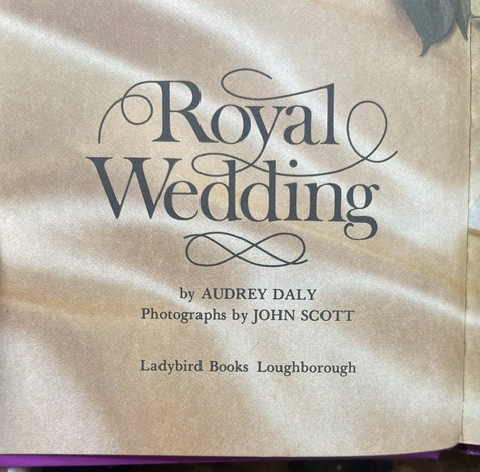
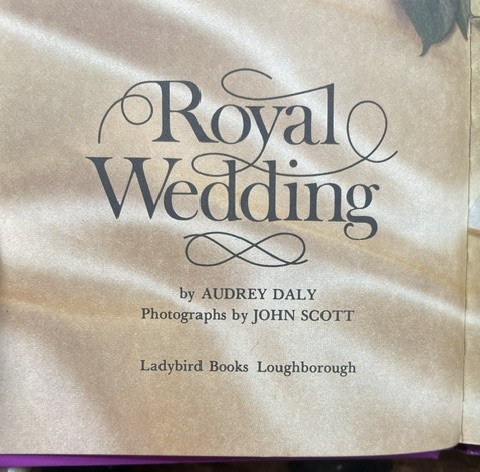
1981 – THE Royal Wedding. Of course your remember – Charles and Di and the mother-of-all meringue wedding dresses. And even more bedazzling than the dress, was the feat pulled off by the team at Ladybird: the feat of getting a book about the wedding on to the shelves in just 5 days.
Five days! Remember, this is 1981 – before mobile phones, the internet and digital printing. When photographs had to be developed, when printing involve phototypesetting and nothing could be ‘Googled’. I don’t usually write much here about the Ladybird of the 1980s or later – but this extraordinary tale needs to be told. And I shall let two of the main players recount it in their own words: then Ladybird Art Director Roy Smith and Senior Editor Audrey Daly.
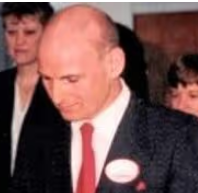
Art Director Roy Smith 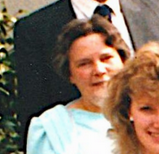
Senior Editor Audrey Daly
Roy Smith:
“When the idea of producing a book on The Royal Wedding was suggested it seemed a fantastic idea”.
Audrey Daly:
“All he [MD Malcolm Kelley] said to me was, ‘Get on with it, Audrey.’ So I did.
First I commissioned royal photographer John Scott to
supply a total of 36 photographs from his various contacts at a cost of £3,000. He was the Queen’s favourite photographer and had a grace and favour residence in Windsor Great Park where I went to discuss our needs. (His real name was Colonel Voynavich and he was a nice old rascal of well over seventy with tremendous charm. Mind you, charm or
no charm, he was tough. I was present once when he negotiated a fee of £10,000 on the telephone from a Swedish magazine for just one photograph!)
Next, we needed an author. Editorial Director Vernon Mills and I started looking frantically for a suitable ‘name’ . We finally opted for one of the women news presenters – after all, princess or peasant, weddings are a woman’s thing. Before commissioning her, I started to look at the logistics and realised that time was going to be at a premium. I asked my boss Vernon if he would mind if I did the writing instead (when I was a journalist, weddings were a cub reporter’s job, no matter how important they were). He said, ‘Ask Sales’. I asked Sales Director Brian Cotton if it would make a lot of difference and he said it might cost us ten thousand sales, but in context this was nothing (although none of us really had any idea just how popular the book was going to become). Nowadays of course you are lucky if you get a first print run of twenty thousand and on demand printing is much lower, but in Ladybird days of old, the break-even point was fifty thousand.
Between us we did all that was possible ahead of the day. Roy [Smith] planned two all-night studio sessions, and MD Malcolm Kelley promised that with his own hands he would provide support by cooking a breakfast of kippers for everyone. (We all slept on the Tuesday night before the wedding, but it was to be mid-day Friday before many of us saw our beds again).
Time for in-depth research into every aspect. First of all came security. I met a kindly policeman at New Scotland Yard who explained what was to happen and what was already in train. The main thing I remember about this visit was the Eternal Flame at the entrance, which I found totally
awe-inspiring.
I milked every newspaper and magazine in sight for interesting nuggets to include. While researching, I stayed from time to time at the Ebury Hotel, which turned out to have various people staying who had been invited to the wedding. It also had excellent food, and some of the ladies-in-waiting dined there. Useful.
Incidentally, we had a stroke of luck – Sales Director Brian Cotton turned out to have a relative who had received an invitation, so we got hold of his card to photograph for our book. A coup! (I never enquired how we got it).
On the Tuesday before the Great Day, Tim Clark – Ladybird photographer and designer – and I drove down to London and stayed that night at the Royal Scot Hotel. (Tim complained about the lack of a swimming pool,
but I had chosen the hotel specifically because of its ease of access to the Ml in preparation for our race north to Loughborough).
Came the day.
Around 7.30 a.m. I phoned the Palace to make sure all was well – it wouldn’t have been the first time bride or groom had got the shakes at the last moment. Astonishingly, the line was open, and the word was ‘Go!’
Tim and I joined John Scott at his club, and I sat down in front of the TV, pen at the ready to form notable sentences as the day unrolled. Later Tim went off with his camera to see if he could find some pictures on his own. He came back late in the day, just as pictures were starting to come in (film of course had to be developed – 1981 was long before the digital
age)”
Roy:
“I was leading my team of six designers [in the factory in Loughborough] and, together with the four editorial team, we assembled at 8 o’clock in the evening in the art studio at Beeches Road, having watched the event on television during the day. As much preparation work had been done as was possible but it still left a lot of work to do.
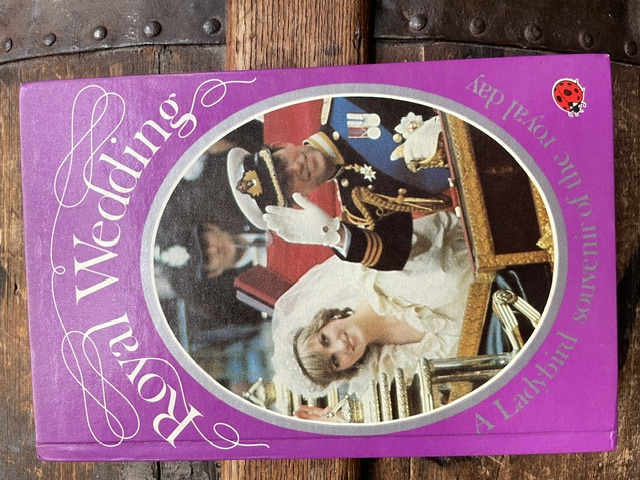
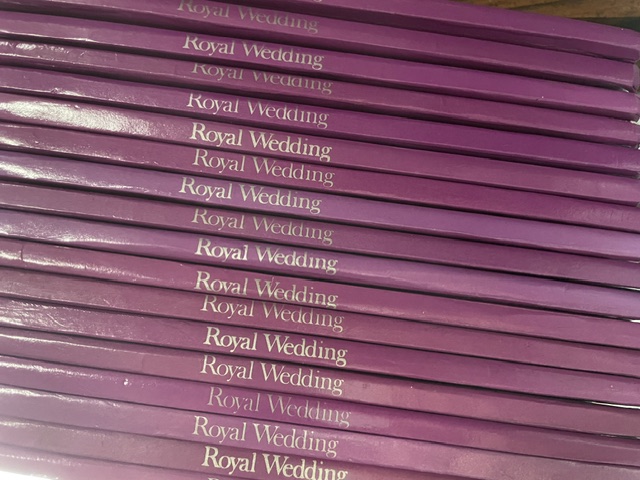
The cover with its royal purple background and silver lettering was printed ahead of time with a central oval left blank to await a suitable photograph of the happy couple. Several of the preliminary pages giving details
of the preparations for the big day were also ready and waiting but we were heavily reliant on a supply of specially commissioned photographs from our Royal photographer in London.”
Audrey:
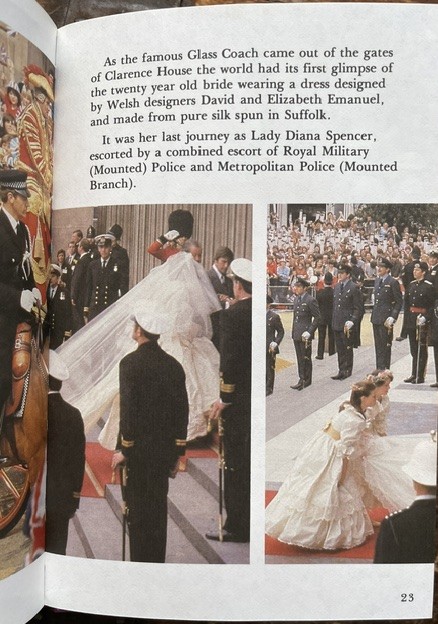
Then around 10.30, the stream [of commissioned photos] began to dry up, and finally there were no more to come. I had just24 photographs, admittedly good and unique to Ladybird, but not enough. I burst into tears (I was a lot younger then), but there was nothing to be done – everything had closed for the night.
Tim and I drove back in sombre silence. Ladybird’s doors were locked, but a tin can on a line hung from the studio window. We rapped it on the glass and we were in. Doom and gloom – only 24 photographs.
Roy:
Everyone was anxiously waiting to start work when the disastrous news came through that out of the fifty or more photographs we had been promised, barely half had arrived. We learned later that the film negatives had been hijacked on the way to the developers!
With the clock ticking away and not enough photographs to fill even half the book it was panic stations. At that particular time, I really didn’t see how it was possible to get any book out in time, and there was a sickening feeling in my stomach when I thought of the enormous pre-sales we had generated through our advertising.
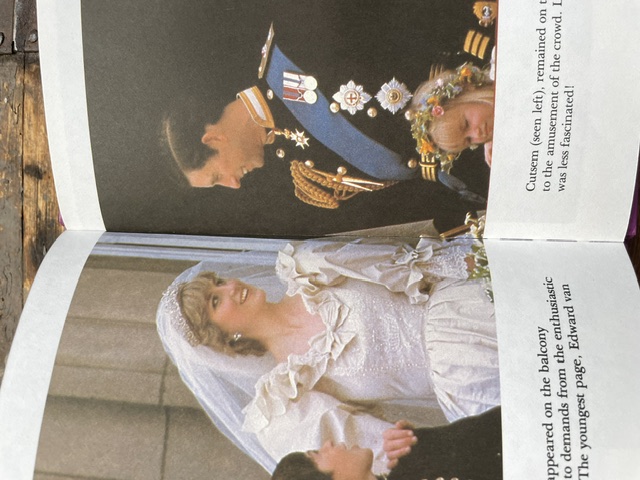
Bearing in mind the limited technology we had at our disposal at the time, we eventually decided to use different parts of a photograph at different enlargements. This certainly helped and allowed us to complete some pages and get them over to our reproduction house in Leicester who were all geared-up and waiting to get started. This was done with a relay of cars ferrying material to and fro throughout the night. Laughable when you think of today’s means of communication.
Audrey:
Only one thing to do – first thing on Thursday morning, I raced to London to get more photographs from another of my photographic contacts, George Fox. Of course he had no duplicates left, but fortunately knew me well enough to let us have a sufficient number of originals to finish our book. We were in business again and I fled back to Loughborough with the spoils.
Roy:
By eight o’clock that morning [Audrey] was back with big smiles on her face and in her hands some life-saving photographs. Copy and captions were hastily written, layouts were designed and we finally managed to put the book to bed by midday.
I can vaguely recall Malcolm Kelley, the Managing Director,
organising champagne with scrambled egg on toast, but it was at this point that mental fatigue really set in and I, like most of the staff was glad to go home for a few hours kip. Although the major part of the work was complete there were still proofs to read and check before any printing plates could be made, so some of us returned to the studio later the same day to sign off the book.
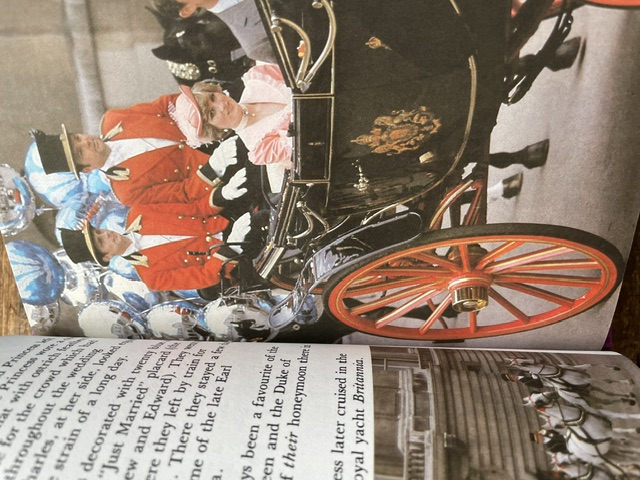
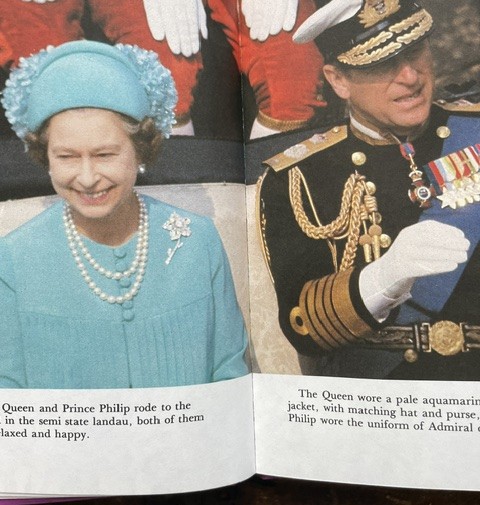
During the next few days our repro house managed to complete their side of the production cycle and eventually supplied us with the necessary plates. Then with the printing and binding departments working around the clock, by day five the books were being dispatched to waiting bookshops all over the country.
Audrey:
And on Monday, our ‘Royal Wedding’ was on the streets, to spend the next months as number one in the top ten ratings. One million six hundred thousand people enjoyed it, and kept it as a souvenir.
We were a good team.”
[The Royal Wedding book eventually sold closer to 2 million copies.
Audrey was not paid a penny for her authorship – it was all just part of the job].
You can read a little more about Audrey here. As for Roy, there is so much to say – his story will be coming soon.